
Skip Navigation
Skip Main Content

Understanding and Preventing Common Childhood Injuries

What Are Common Childhood Injuries?

Childhood is a time of exploration, movement, and learning, and with that energy comes an inevitable exposure to physical risk. Injuries are one of the leading health concerns in children across all age groups. From a toddler taking a tumble off a play structure to a teenager spraining an ankle on the field, childhood injuries range from minor scrapes to more serious accidents requiring medical attention.

Most childhood injuries are not the result of bad parenting or recklessness. They happen because children are developmentally wired to test boundaries and explore their environments. However, many common injuries are also preventable, and understanding the types of injuries that occur most often, along with how to recognize when medical care is needed, can make a real difference in keeping children safe.
Appointments

Common_Childhood_Injuries

Frequently Asked Questions

What Are the Most Common Types of Injuries in Children?

Children experience a wide variety of injuries depending on their age, activity level, and environment. Some of the most frequently seen types include:

  • Falls are the most common cause of injury across all pediatric age groups. Young children fall from furniture, playground equipment, and stairs. Older children fall during sports and outdoor activities. Falls can cause bruises, cuts, broken bones, and in more serious cases, head injuries.
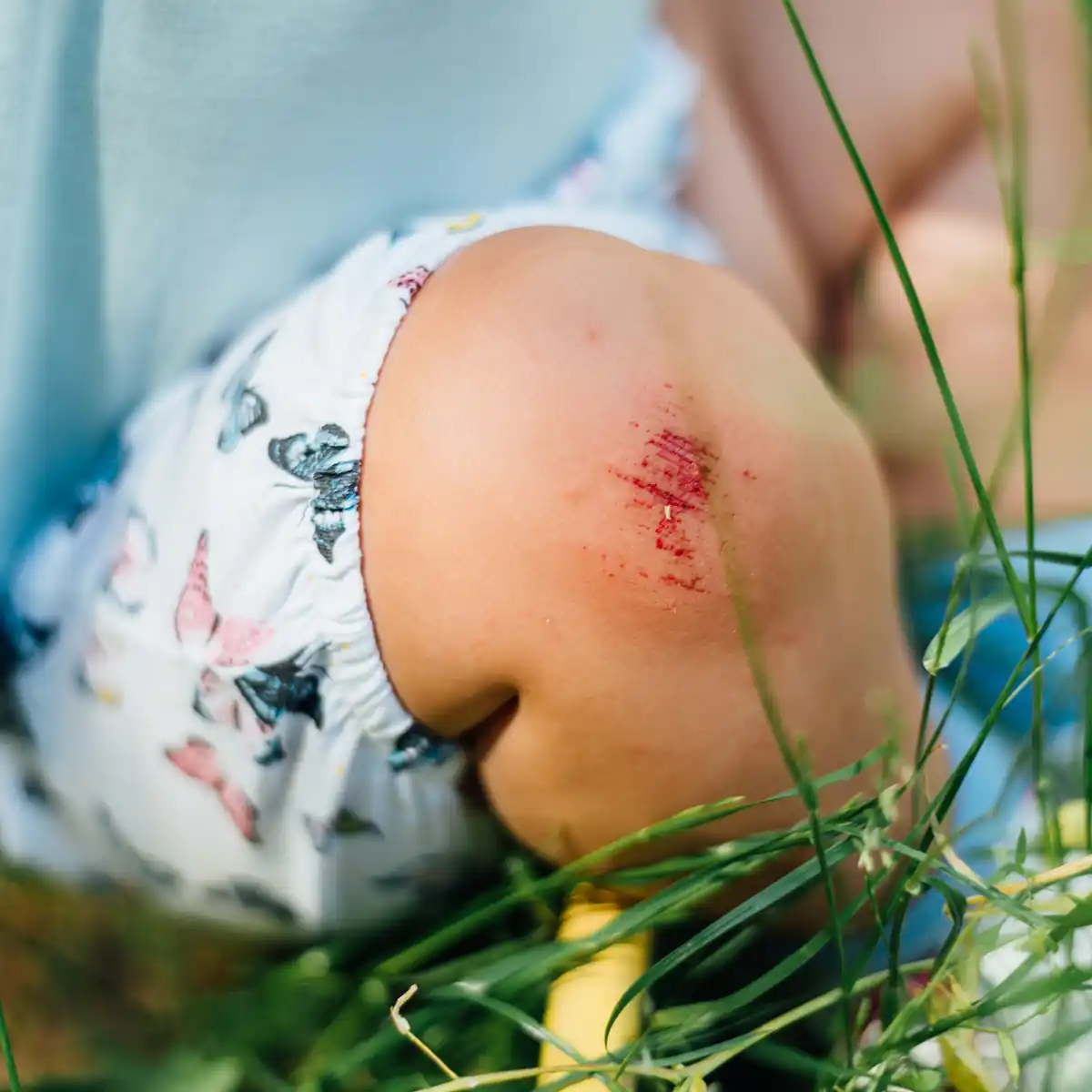
  • Cuts and Lacerations happen when children contact sharp objects, broken surfaces, or fall onto hard edges. Most cuts are minor and heal with basic wound care, but deeper lacerations may require medical attention.
  • Sprains and Strains involve the stretching or tearing of ligaments or muscles, usually from a sudden twist, fall, or overuse during physical activity. The ankle is one of the most commonly sprained joints in children.
  • Fractures (Broken Bones) are common in childhood, particularly in the arms and wrists from falls where a child reaches out to catch themselves. Children's bones heal relatively quickly but often need to be properly evaluated to ensure they heal in the correct position.
  • Burns can result from contact with hot liquids, hot surfaces, or fire. Scalds from hot beverages and bathwater are particularly common in toddlers.
  • Head Injuries range from minor bumps that cause temporary discomfort to more significant concussions or traumatic brain injuries. Head injuries deserve careful attention, especially in young children.
  • Dental Injuries including chipped or knocked-out teeth are common in young children who fall or run into surfaces at face height.

What Types of Injuries Are Most Common at Different Ages?

Injury risk shifts significantly as children grow, and understanding the pattern by age group can help families anticipate and prepare.

Infants and Toddlers are at highest risk for falls from furniture and heights, burns from hot liquids, and choking or suffocation from small objects. At this age, the home environment is the primary risk zone. Baby gates, hot water temperature settings, and keeping small objects out of reach are all relevant safety considerations.

Preschool-Age Children are active, curious, and not yet fully aware of danger. Falls from playground equipment are common at this age, as are cuts from sharp objects and near-drowning incidents near water.

School-Age Children experience more injuries related to bicycles, scooters, and outdoor play. Sports injuries begin to become more common as children start organized activities. Using helmets and appropriate protective gear becomes increasingly important.

Teenagers are more frequently injured in sports-related incidents, vehicle accidents (including bicycles, scooters, and cars), and high-intensity physical activities. Concussions and overuse injuries are particularly common in student athletes.

What Is a Concussion and How Can Parents Recognize It?

A concussion is a type of mild traumatic brain injury caused by a bump, blow, or jolt to the head or body that causes the brain to move rapidly inside the skull. Concussions are especially common in contact sports and from falls.

Concussions do not always involve a loss of consciousness. Many children with concussions remain awake and appear to function normally right after the injury, which can make recognition difficult.

Signs of a concussion to watch for include:

  • Headache that begins or worsens after a head injury
  • Dizziness or Balance Problems that are new following the event
  • Confusion or Fogginess where the child seems dazed, slowed, or not quite themselves
  • Memory Problems such as not remembering what happened right before or after the injury
  • Nausea or Vomiting following a head impact
  • Sensitivity to Light or Noise that is new or unusual
  • Changes in Sleep such as sleeping much more or much less than usual
  • Mood or Behavior Changes including unusual irritability or emotional sensitivity

Any child suspected of having a concussion should be removed from physical activity and evaluated by a healthcare provider. Return to activity should happen gradually and with provider guidance.

What Are Overuse Injuries and Why Are They Common in Young Athletes?

Overuse injuries develop gradually from repeated stress on a bone, muscle, tendon, or growth plate rather than from a single accident. They are increasingly common in children who specialize early in one sport or participate in year-round training without adequate rest.

Growing children are particularly vulnerable because their bones and connective tissues are still developing. Areas of active bone growth, called growth plates, are softer and less resistant to repeated stress than the surrounding bone.

Common overuse injuries in children include:

  • Shin Splints which cause pain along the front or inner edge of the lower leg, often in runners and soccer players.
  • Stress Fractures which are small cracks in bones from repetitive impact, most often seen in the feet and lower legs.
  • Osgood-Schlatter Disease which causes pain just below the kneecap at a bony bump on the shinbone, common in active adolescents going through growth spurts.
  • Little League Elbow or Shoulder which refers to pain in the arm from repetitive overhead throwing, common in young baseball players.

Taking adequate rest, varying activities across seasons, and listening to pain as a warning signal are all important parts of injury prevention in young athletes.

How Can Families Help Prevent Common Childhood Injuries?

While not every injury can be prevented, many of the most common ones can be reduced or avoided with thoughtful preparation and supervision.

  • Use Age-Appropriate Safety Equipment consistently. This includes properly fitted helmets for biking, scooters, and contact sports, as well as pads for the knees and wrists.
  • Ensure Safe Home Environments by installing stair gates for young children, securing furniture that could tip, and keeping sharp objects, hot liquids, and cleaning products out of reach.
  • Supervise Around Water at all times with young children. Drowning can happen in a very short time and in surprisingly shallow water.
  • Encourage Rest and Recovery particularly for children in organized sports. Rest days are not optional, they are part of healthy development.
  • Teach Children About Safety Rules in an age-appropriate way, including road safety, playground behavior, and what to do when something feels unsafe.
  • Check Playground and Sports Equipment regularly for wear, damage, or hazards that could cause injury.

Prevention is most effective when it is built into daily habits rather than saved for obvious high-risk moments.

When Should I Seek Medical Care for a Childhood Injury?

Many childhood injuries can be managed at home with rest and basic first aid, but some require a medical evaluation.

Seek emergency care immediately if a child:

  • Has lost consciousness, even briefly, following a head injury
  • Has a seizure following any injury
  • Has an open fracture where bone is visible through the skin
  • Cannot bear weight on a limb at all following a fall or collision
  • Has a deep cut that is bleeding heavily and not stopping with pressure
  • Has a burn that covers a significant area of skin or looks very deep
  • Is showing signs of a concussion and symptoms are worsening

Contact a pediatric provider for evaluation if:

  • Pain from an injury is not improving after several days
  • A limb is significantly swollen, bruised, or has limited range of motion
  • You suspect a fracture or growth plate injury
  • A wound shows signs of infection including increasing redness, warmth, swelling, or drainage
  • Your child received a head injury and you have any questions about concussion

When in doubt, it is always appropriate to call the pediatric office and describe what happened. The care team can help determine whether the injury needs an in-person visit.

Contact Your Pediatric Provider After for Urgent Injury Care

Care That Keeps Families Moving

Appointments